Keys, glasses, and the other most frequently lost items in America

Andrey_Popov // Shutterstock
Everyone has experienced the pain of losing something important—seemingly always at the worst times.
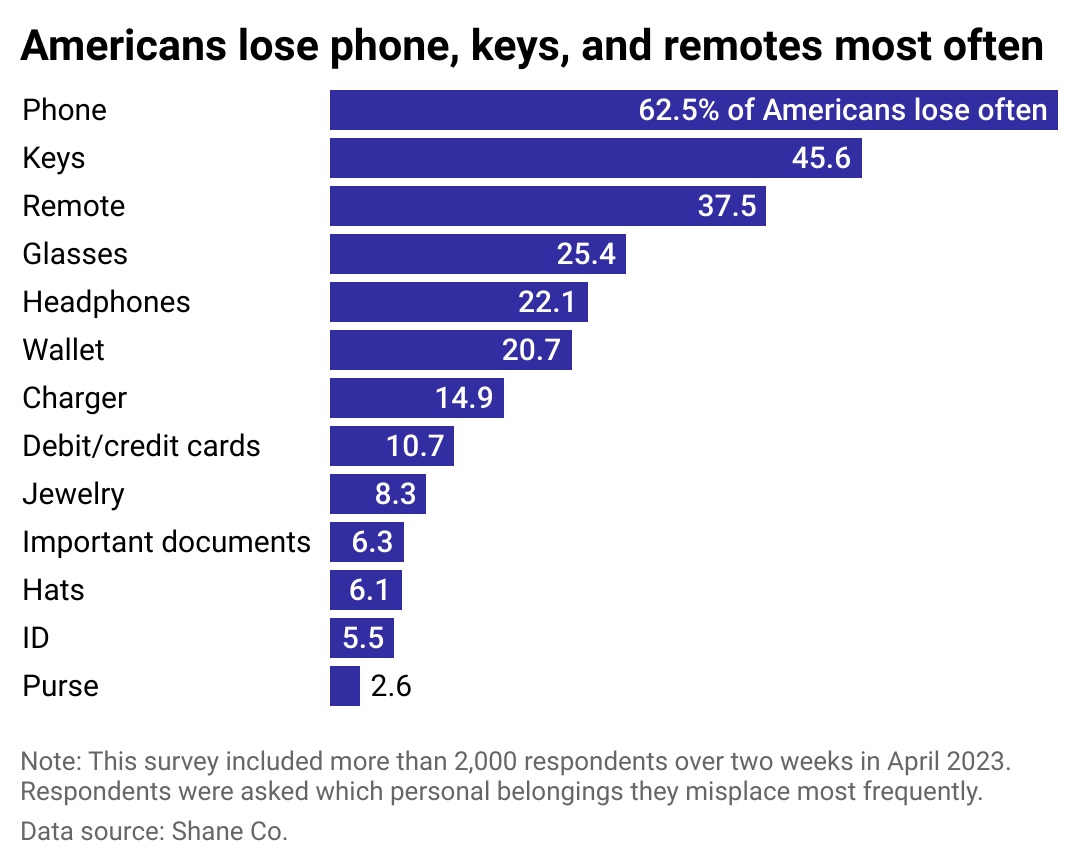
Americans lose an average of five items per month, according to a Shane Co. survey. Tile utilized that data to chart the most commonly lost items in the U.S.
People spend an average of nearly 17 hours searching for lost items annually, taking about 16 minutes to find each lost item, according to the survey. Those delays can cause turmoil—over a third of Americans have been late for work or school due to losing an item, and 13% have gotten into fights with loved ones over it.
That frustration—directed at yourself or others—can make it even harder to find lost items, as anger and panic can jumble your memory, psychology professor Susan Krauss Whitbourne told Vice. It's better to stay calm, think carefully about where you last had the item, and search for it methodically rather than impulsively. Indeed, about 1 in 5 Americans said they most often find lost items in the place where they should have been all along.
Ultimately, losses tend not to be unique. Losing frequently used items is a part of life, especially as people tend to own more things than they once did. Read on to see how your most commonly lost items compare to other Americans.
KEEP TRACK OF EVERYTHING
Find misplaced things nearby and far away with Tile trackers and the Life360 app that works on both iOS® and Android™.
THE BEST KEY FINDER
Never lose your keys again with the Tile Mate key finder that uses bluetooth to locate your keys.
These are the items Americans lose most
Perhaps unsurprisingly, the most commonly lost items were also among the most ubiquitous and important: phones and keys. Most people don't leave home without these items, making losing them all the more stressful.
Often, people lose items due to absent-mindedness—i.e., they are focusing on something else when parting with the to-be-lost item and fail to commit its location to memory, making it harder to recall later. Remotes, headphones, and wallets can thus be easily lost as people are often thinking about what they are watching, listening to, or purchasing when setting these items down.
Absent-minded tendencies show in the places where lost items eventually turn up, as well. Most frequently, Americans report finding their lost items in the couch or in clothing they recently wore. These spots lend themselves to split focus, whether setting down the remote once you've already begun watching a show or leaving your wallet in your pocket when you change into pajamas at the end of a long day.
The most straightforward way to lose fewer things is to designate a place for your essential items and build a habit of putting them there. These routines can take time to build. To keep it simple and achievable, psychologists recommend starting with a designated "dump place" where you exclusively store the items you need daily—ideally, a spot not crowded with other items and one that fits into your existing space and habits.
Others recommend tagging important belongings with a specific color that will stand out, making them easier to spot, or taking photos of items to reference their location. Nowadays, there are also technological solutions to help find lost items, such as find my device
apps on phones and physical tags that you can add to keychains or wallets.
Ultimately, losing things less often will require a solution that works with how your mind operates. And, when in doubt, check your couch, yesterday's clothes, and the place the item is supposed to be.
HOW TO FIND LOST THINGS
Use a Bluetooth Tracker to find lost: Purses, Backpacks, Wallets, Keys, Luggage, Pets and more.
Written by Paxtyn Merten. Story editing by Alizah Salario. Additional editing by Kelly Glass. Copy editing by Kristen Wegrzyn.