Life360 Global Pet Parenthood Report: The Rise of the “Furry First Child”
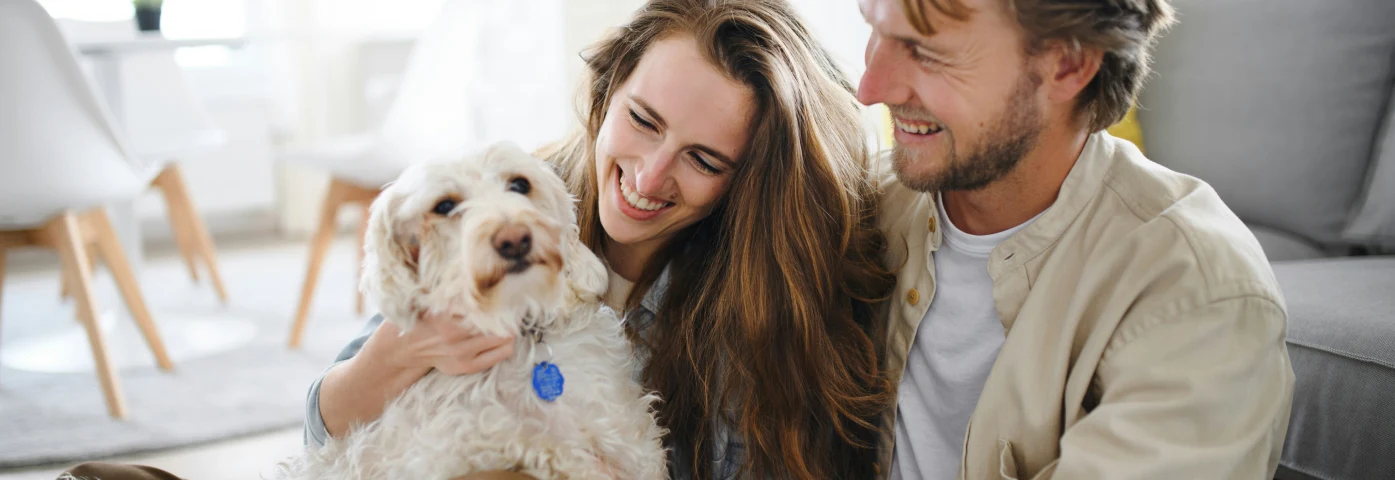
As traditional life goals of homeownership, marriage, and parenthood feel less accessible or essential to younger generations across the globe, pets have emerged as a new priority, shifting modern family dynamics.
According to a new international study from family connection and safety app Life360, pets are increasingly viewed as children within households. In fact, 60% of pet parents say they are currently prioritising their time, love, and money on their pet rather than planning for children. Citing emotional benefits like reduced stress (81%) along with adding structure and a sense of responsibility (77%), and notably, reminding them to find joy in everyday life (79%), pet parenthood is being treated more as a chosen path than a placeholder.*
This new generation is not avoiding parental commitments; they're opting for a different breed of commitment, one that society broadly understands as offering more freedom and flexibility.
Methodology
Following the launch of its pet safety products, including a community-based Pet Finder Network and wearable Pet GPS tracker, Life360 conducted a comprehensive analysis of the over 6 million Pet Profiles added to family circles from around the world. The family connection and safety app interpreted mobility patterns and in-app engagement to understand how pets fit into users’ daily routines and decision-making. This was paired with attitudinal insights from an international study exploring how pet ownership shapes relationships, emotional well-being, and broader lifestyle choices. What emerged was a portrayal of what it means to be a pet parent today.
The Trends Defining Pet Parenthood
The SIPP & DIPP Household
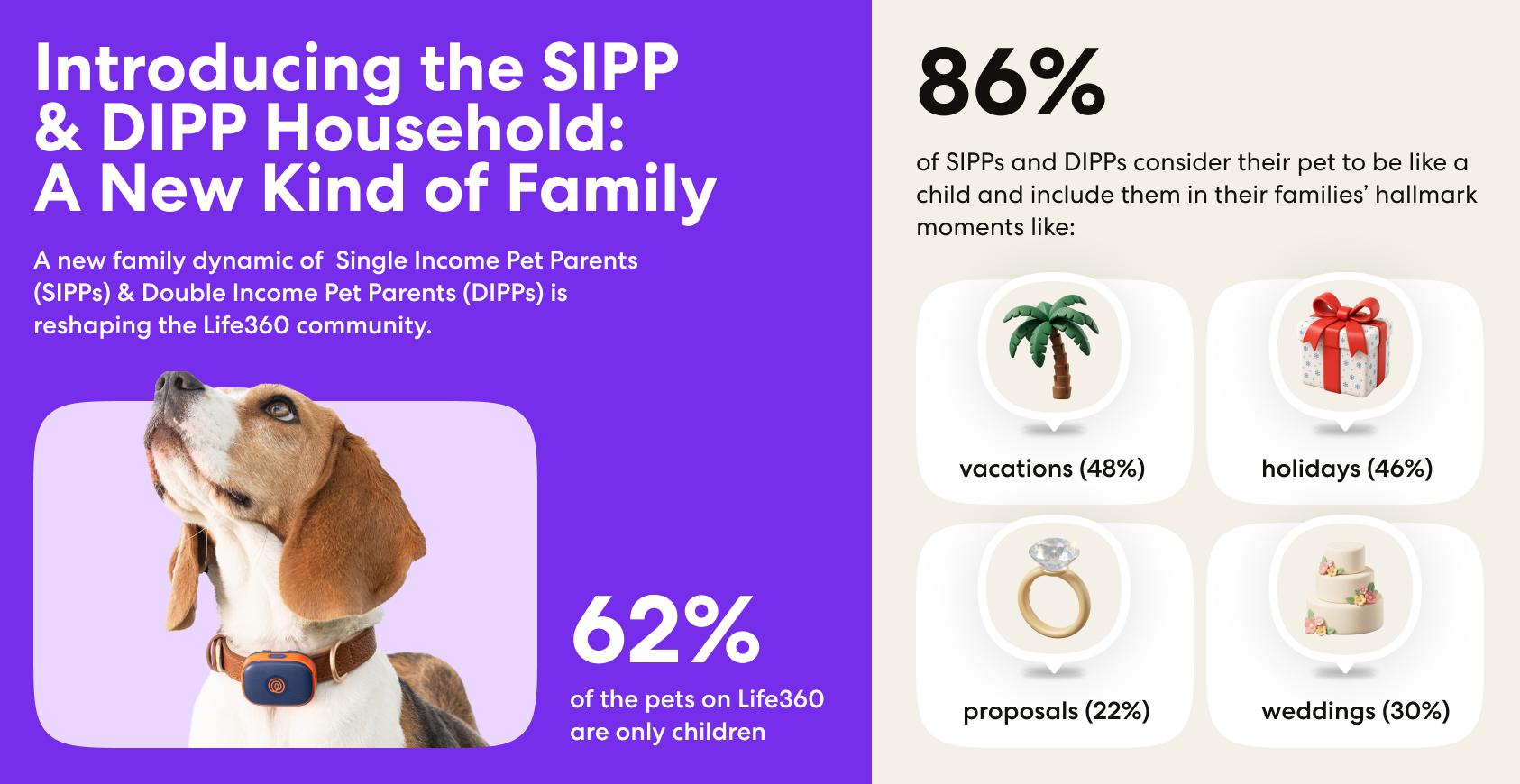
Since integrating Pet Profiles into its app, Life360 has documented a steady increase in family circles containing solely one or two adults and a pet - these single income pet parents (SIPPs) and double income pet parents (DIPPs) are a new family dynamic reshaping the Life360 community. In fact, more than 120,000 new Pet Profiles are created on Life360 each week and 62% of those pets are “only children,” meaning they live in a SIPP or DIPP household.** Treated as a true part of the family, 86% of SIPPs and DIPPs consider their pet to be like a child and, as such, include their pet in hallmark moments like vacations (48%), holiday gatherings (46%), engagement proposals (22%), and even weddings (30%).*
The Constant Companion
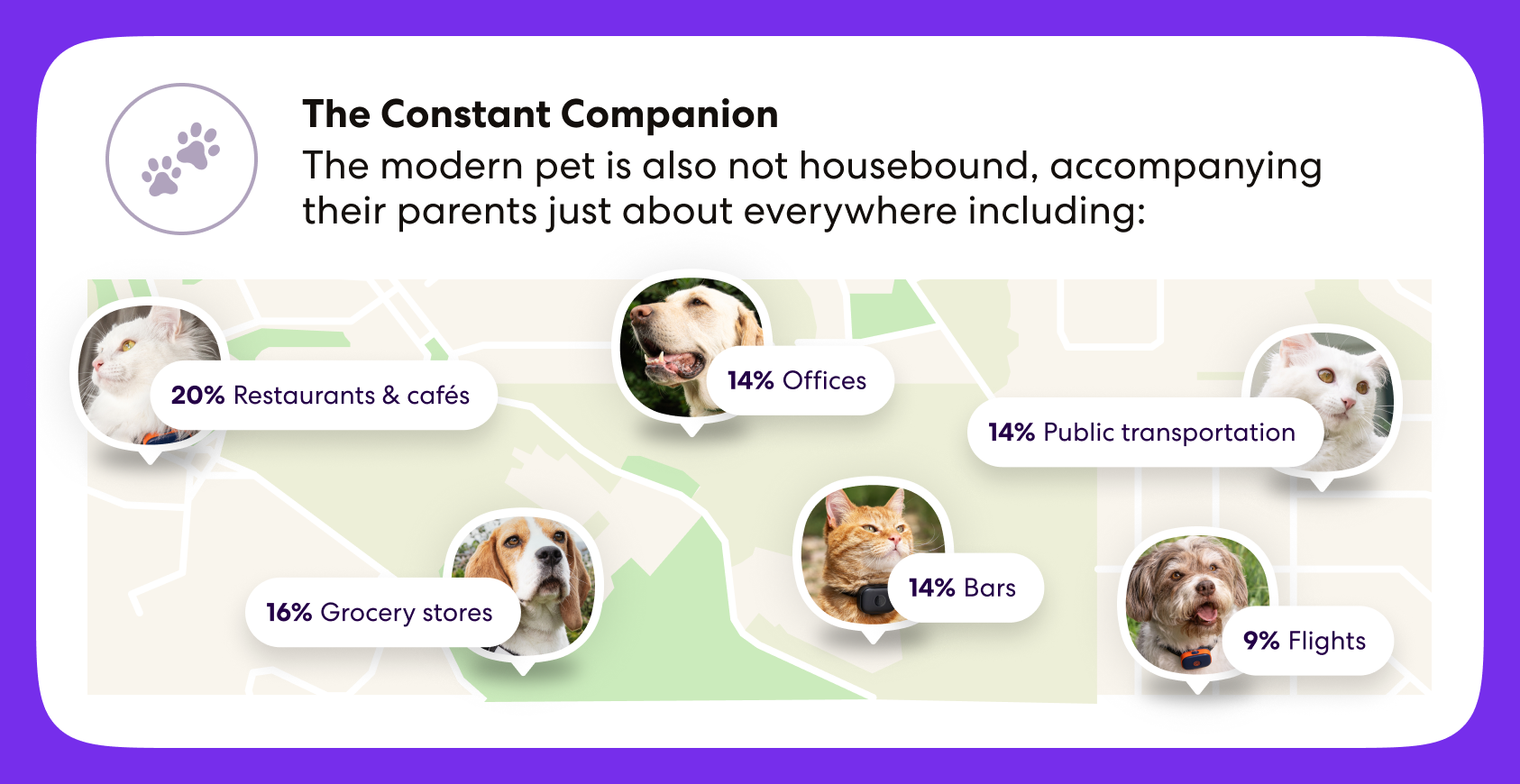
The modern pet is not housebound. Over 75% of SIPPs and DIPPs’ daily routines are shaped by their pets, who now have a pronounced public presence as they accompany their parents just about everywhere.* Nearly a third (31%) of SIPPs and DIPPs admit to bringing their pets to at least three public venues each week. This includes restaurants and cafés (20%), grocery stores (16%), offices (14%), and even bars (14%). A well-traveled 9% have been on flights and another 14% regularly use public transportation.*
Reverse Separation Anxiety
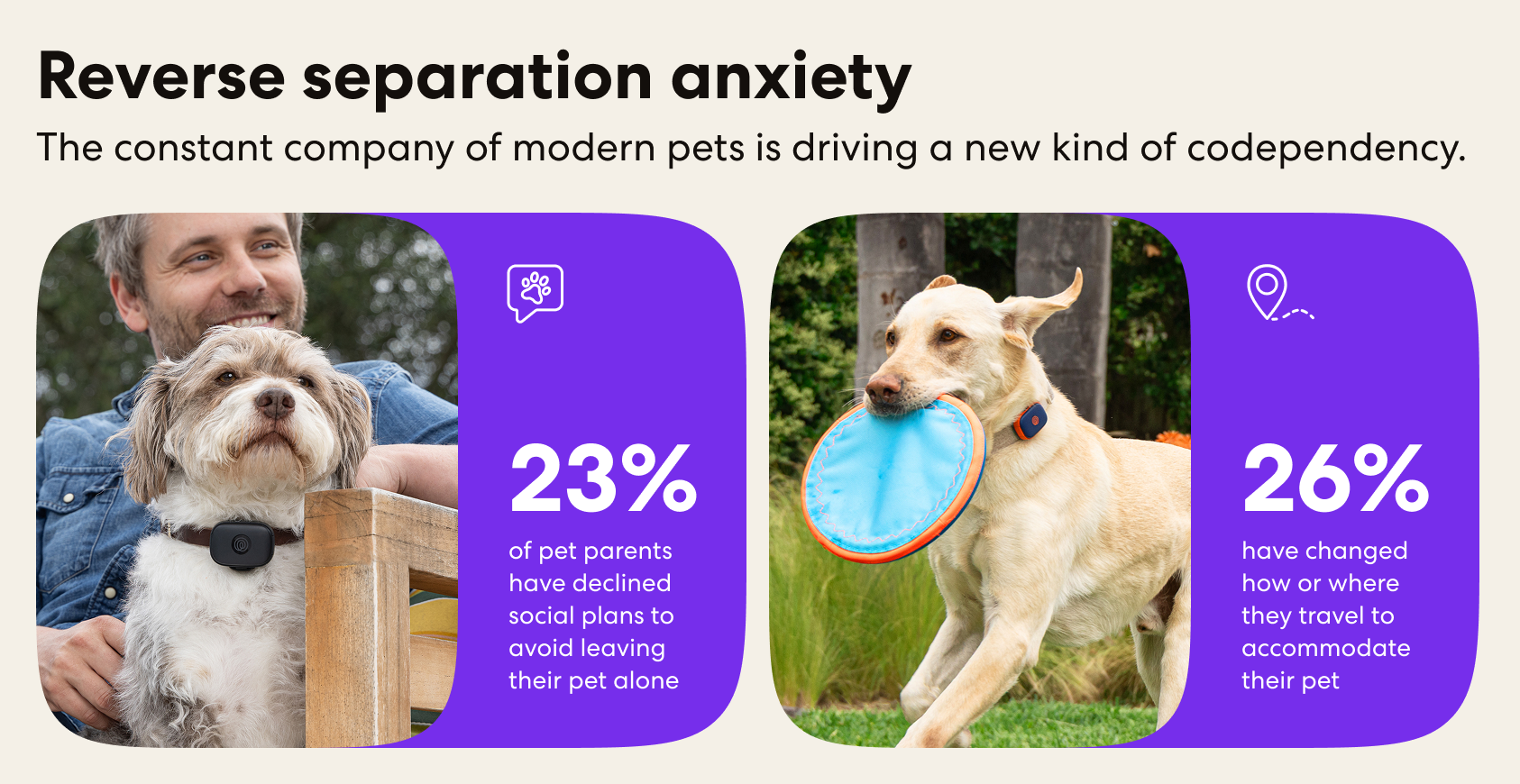
The near-constant company of modern pet ownership may be driving a different kind of codependency. About a quarter of surveyed pet parents have declined social plans to avoid leaving their pet alone (23%) or have changed how or where they travel to accommodate their pet (26%).* Life360 has also noted users check on pets in the app at slightly higher rates than human children (a median of 15 times per month compared to 13 times, respectively). The majority of these check-ins occur in the evening, suggesting that pet parents experience the most separation anxiety during outings outside of business hours.**
The Pet-to-Proposal Pipeline
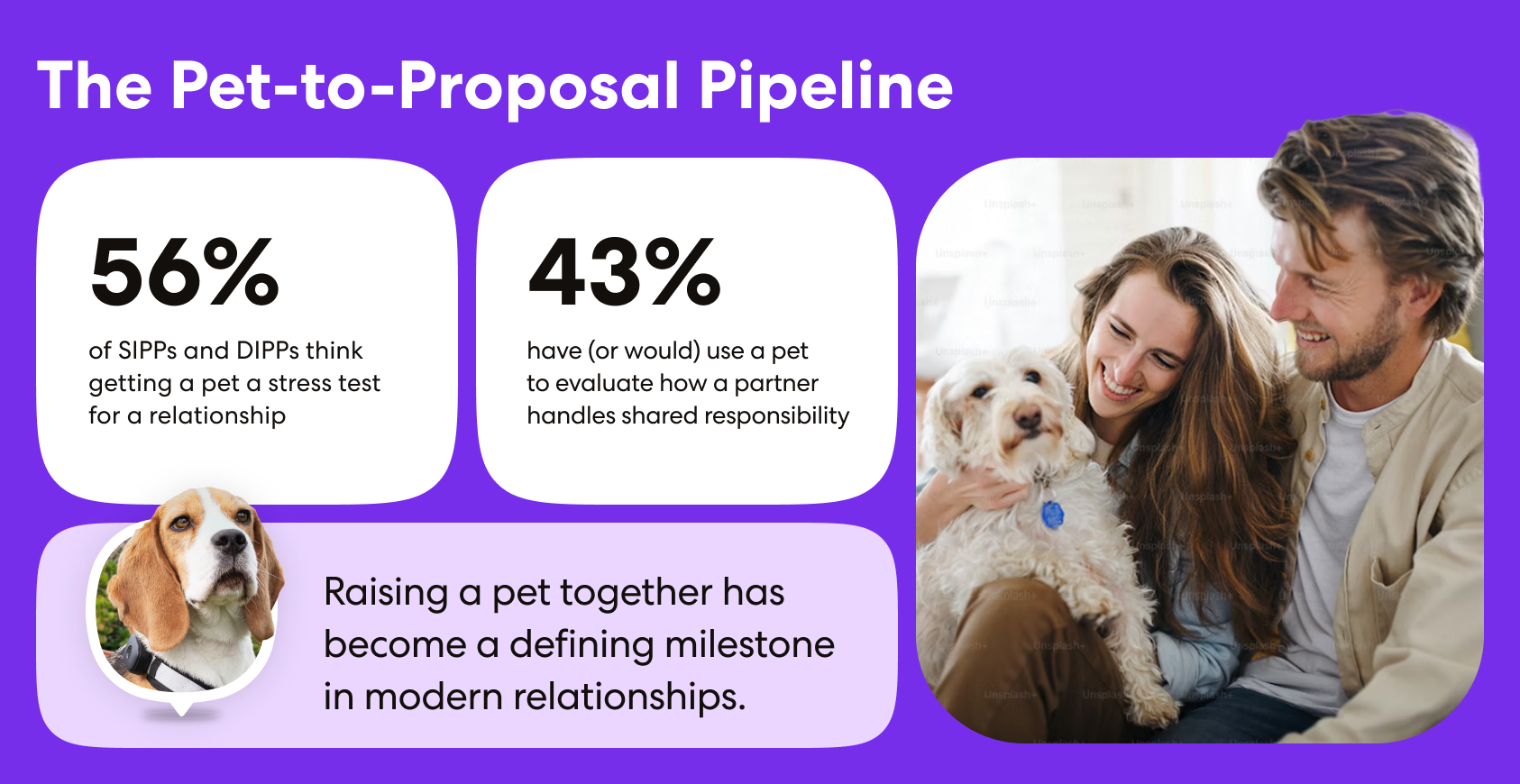
Raising a pet together has become a defining milestone in modern relationships, often arriving before marriage or children. Over half of SIPPs and DIPPs (56%) say that co-parenting a pet together can act as a stress test for a relationship before committing further. In fact, 43% have used, or would use, a pet to evaluate how a partner handles shared responsibility, making pet ownership a real measure of long-term compatibility.*
The Rise of the “Furry First Child”
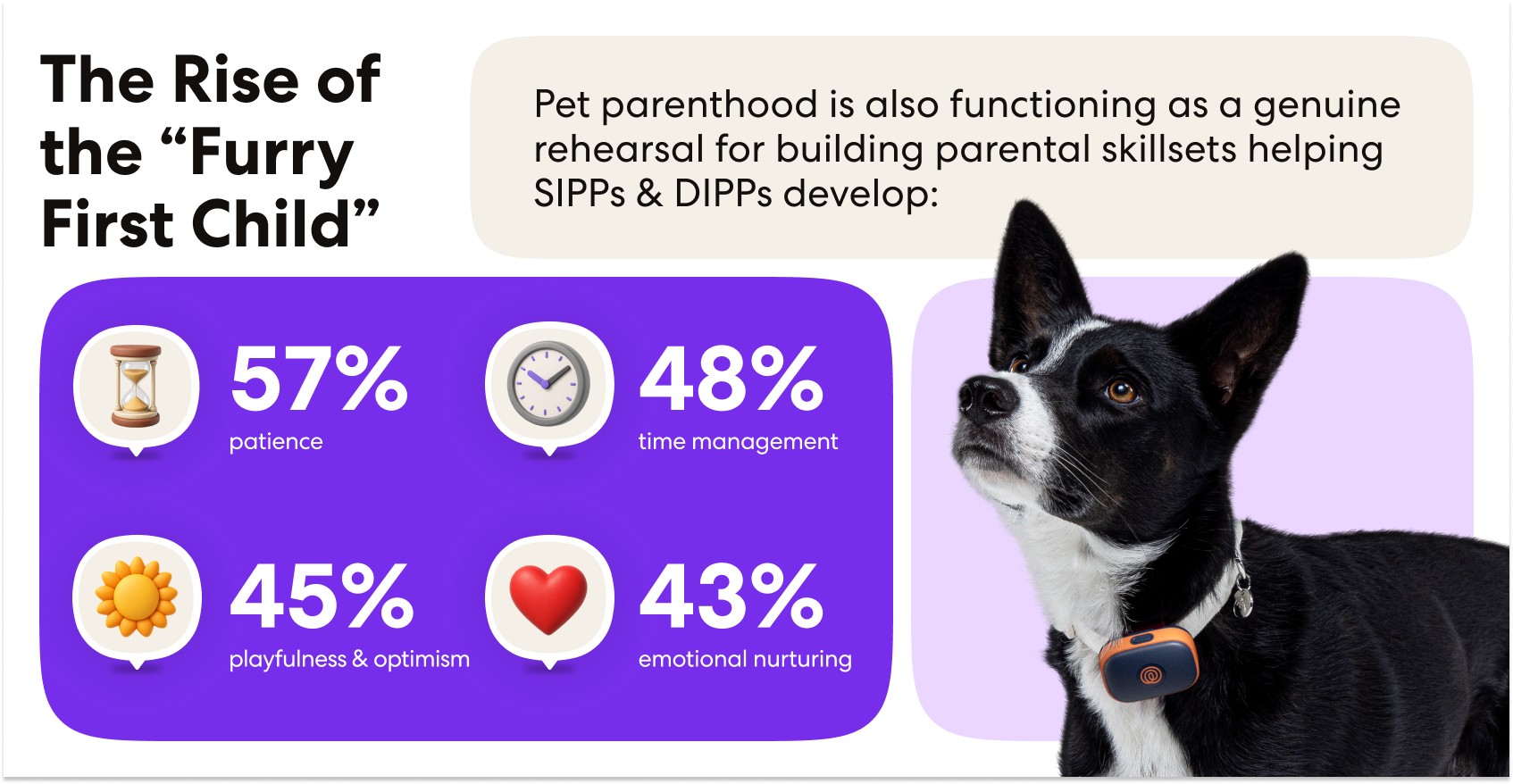
While 62% of general survey respondents agree that pets allow people to maintain more freedom and flexibility than having children,*** 27% of current SIPPs and DIPPs do plan to have children eventually.* Meaning a fair amount of these pets will graduate from only child to oldest child in the coming years. Pet parenthood is also functioning as a rehearsal for building parental skillsets. More than half (55%) say a furry first child is a good way for couples to see if they are ready for children, noting that it has helped in developing patience (57%), time management (48%), playfulness and optimism (45%), emotional nurturing (43%), and even financial planning skills (32%).*
The Bottom Line
At a time when traditional family structures can feel less accessible or misaligned with the lifestyles of younger generations, pet parenthood has become a primary way for people to build connection, routine, and a sense of home. While 19% of the general population report having chosen to get a pet before having children,*** the sentiment is strongest among millennials specifically, with 45% currently on the same path — with a pet at home and children planned for the future.* Pet-first households are emerging as the dominant model of living, with pets reshaping how people approach relationships, identity, and long-term decisions.
* Survey of 6,000 single income pet parents and double income pet parents without children across the UK, USA, and Australia conducted between April 8, 2026 and April 14, 2026
** Internal Life360 data, 2026
*** Survey of 6,000 respondents (aged 18-45) across the UK, USA, and Australia conducted between April 8, 2026 and April 14, 2026