Cat GPS Tracker: Best Options for Indoor & Outdoor Cats
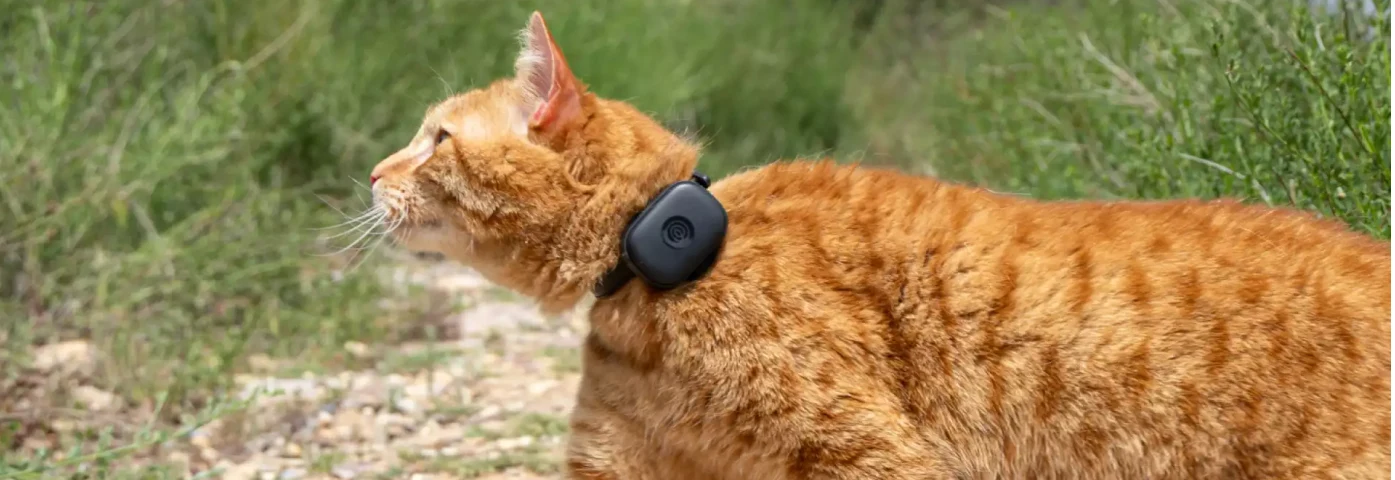
Summary
What this article covers:
A breakdown of the top cat GPS trackers in 2026, including how each technology works, which options are best for indoor vs. outdoor cats, and how to choose the right one for your specific situation.
Who it’s for
Pet parents with outdoor cats or indoor cats who escape more often than they should
Anyone comparing GPS, Bluetooth, and RF tracking options
Families who want to track their cat alongside their kids and other loved ones
People wondering whether a cat GPS tracker is worth it
Key Takeaways
Cat trackers run on one of three technologies: GPS, Bluetooth, or RF
GPS is the best option for outdoor or escape-prone cats; Bluetooth works best for indoor cats who rarely stray far
Weight matters more for cats than for dogs, so look for trackers under 35 grams when possible
Always use a breakaway collar with any cat tracker, no exceptions
Life360 Pet GPS is the only tracker that puts your cat on the same map as your family, your people, and your things
Cats treat indoor only
more like a suggestion than a rule. One cracked window or open door, and they're gone, not lost as far as they're concerned, just exploring on their own schedule while you're the one standing on the porch calling their name. A cat GPS tracker won't stop the great escape, but it tells you exactly where it led.
Choosing the right tracker is not always simple. Some devices give you a live map, while others just point you in the general direction using Bluetooth or radio frequency, with much shorter ranges. Battery life, subscription costs, size, and accuracy vary too, so it's worth knowing what you're actually getting before you buy.
This guide compares the best cat GPS trackers available in 2026, highlighting each option's strengths, limitations, and ideal use cases to help you choose the right tracker for your cat.
Know where the great escape led.
Life360 Pet GPS tracks your cat in real time and puts them right on the same map as the rest of your family.
How Cat GPS Trackers Actually Work
Most pet parents assume every tracker works the same way. They don't. The technology inside determines whether you get a live map, a directional signal, or just a last-known location. That difference is everything when your cat is actually missing.
Real GPS trackers connect to GPS satellites to calculate your cat's location outdoors, then transmit that data over a cellular network to your phone app. It's the same core technology behind navigation apps, just now working for your cat instead of your commute. GPS gives you your cat's real-time location on a map, with reliable coverageThat's why it's the go-to for outdoor cats.
Bluetooth trackers use Bluetooth Low Energy instead of GPS satellites. Their Bluetooth range is much shorter than GPS, making them a better fit for indoor cats. They work by pinging nearby Bluetooth-enabled devices, so they're fast and convenient when your cat is within a few hundred feet. Once your cat wanders beyond that range, the signal disappears. Bluetooth is most useful for indoor cats who occasionally slip outside but rarely go far.
RF (radio frequency) trackers use a direct signal between a handheld receiver and a tag on your cat's collar. They don't rely on cell coverage and can locate a cat within a building or in areas with no signal at all, guiding you by signal strength rather than a map. The trade-off is that you have to physically go out and hold the receiver to use it. There's no app, no mapping, no location history.
One app for your cat, your kids, your keys.
Life360 Pet GPS is the only tracker on this list that shares a map with the rest of your family's safety features.
The 5 Best Cat GPS Trackers in 2026
1. Life360 Pet GPS, Best for Families Who Want One App
Life360 Pet GPS combines LTE-M cellular, Bluetooth Long Range, WiFi, and multi-constellation GPS tracking in a single device. The feature that sets it apart from every other option on this list: your cat appears on the same Life360 map as your family members, your Tile-tagged keys, your kid's backpack, everything. One app, everyone accounted for, including your cat.
For pet parents already using Life360 for family safety, adding the Pet GPS is a natural extension rather than another thing to manage. When your cat leaves a designated safe zone, you get an instant escape alert. If your cat goes missing, you can activate Escaped Pet Mode to alert your Life360 Circle and send a Lost Pet Alert to the Pet Finder Network, which reaches nearby Life360 members who can help. The built-in safety light and chime also make nighttime searches a lot less stressful.
The specs back up the adventure-ready promises: IP68 water and bite resistance, up to 14 days of battery life on a single charge, and a six-month Reserve Mode for low-power long-term tracking. It weighs 33.7 grams and fits collar widths up to 1.25 inches. It requires a Life360 Gold or Platinum membership, which also covers crash detection, emergency dispatch, and roadside assistance for your human family members.
Ideal for: Families already using Life360 who want to add their cat to the same map, or any pet parent who wants escape alerts, a Pet Finder Network, and a long-lasting battery in one package.
2. Tractive GPS CAT Mini, Best Standalone GPS Tracker
Tractive is the most consistently recommended standalone GPS cat tracker right now, and the Cat Mini is the version specifically designed for cats. At 25 grams with a breakaway collar mount included, it's built around the weight and safety considerations that matter most for cats. It tracks via LTE cellular, creates virtual fences with escape alerts, includes activity monitoring and health insights, and offers live tracking that updates every two to three seconds in active mode.
The app is well-reviewed, and coverage is broad, working in 150-plus countries. The main ongoing cost is the subscription, which runs roughly six to thirteen dollars per month, depending on plan length. Tractive lives in its own app, separate from any family safety features, which is a fine setup for pet parents who want a focused, standalone solution.
3. Apple AirTag, Best for iPhone Users With Indoor Cats
AirTag is not a GPS tracker. That's important to understand before you buy one. It works by using Bluetooth to ping off nearby iPhones through Apple's Find My network, relaying your cat's approximate location back to you. In a dense urban neighborhood where iPhones are everywhere, that can feel almost like real-time tracking. In the suburbs or rural areas, your cat's location might not update for hours.
At roughly 11 grams, it's the lightest option on this list and costs $29 with no subscription. For an indoor-outdoor city cat who occasionally slips into a neighbor's yard and doesn't wander far, AirTag covers a real use case at a low price. Just don't rely on it as your only tracker if your cat roams into areas with fewer people around.
4. Tabcat V2, Best RF Tracker for Indoor Locating
Tabcat trackers use RF technology instead of GPS or Bluetooth. You hold a handheld receiver that beeps faster and louder as you get closer to the tag. No map, no app required, no cellular coverage needed. It can pinpoint a cat hiding inside a house down to a few centimeters, which is something GPS simply can't do in an indoor environment.
The tag is feather-light at under 8 grams, and the batteries last for months without recharging. There's no subscription fee, no cellular plan, and no ongoing costs after the one-time purchase. The range tops out at around 400 feet, so the Tabcat isn't useful for a cat who has actually escaped the neighborhood.
5. Girafus RF Tracker, Best No-Subscription Option for Rural Cats
Similar in technology to the Tabcat but with a slightly longer range, the Girafus uses radio frequency with a handheld locator that guides you toward your cat by signal strength. No maps, no app, no cell service required. The tag is lightweight, and the battery lasts a long time between replacements. For pet parents in areas with poor or no cellular coverage, this is a practical option that doesn't go silent the moment your cat crosses into a dead zone.
The limitation is the same one that applies to all RF trackers: you have to go out with the receiver to use it, and there's no location history, no virtual fence, and no escape alerts.
How to Choose the Right Tracker for Your Cat
The best tracker for your cat depends on how far they roam. GPS trackers are ideal for outdoor cats, escape artists, and cats who have gone missing before. Bluetooth and RF trackers work better for cats who stay close to home. Pet Tags provide an easy way for anyone who finds your cat to quickly reconnect with your family.
Weight and comfort also matter. Most veterinarians recommend keeping collar accessories under about 3% of your cat’s body weight. For most adult cats, that means choosing a tracker under 35 grams, especially for smaller cats under eight pounds.
Always attach your tracker to a breakaway cat collar or a manufacturer-approved collar. Breakaway collars help prevent injuries if your cat gets caught on something, though you may lose the tracker if the collar releases. Features like escape alerts and geofencing help you know when your cat leaves a safe area.
If your family already uses Life360 for location sharing, crash detection, or driving safety, Life360 Pet GPS makes it easy to keep your cat on the same map. You get real-time tracking, escape alerts, activity tracking, and location history without managing another app.
The right tracker depends on your cat’s habits, your coverage needs, and how you want to stay connected. Life360 Pet GPS brings your pet’s location into the same app your family already uses.
Frequently Asked Questions
What is the difference between a GPS cat collar and a Bluetooth tracker?
A GPS cat collar uses GPS satellites and a cellular network to provide your cat's real time location over an unlimited range, while Bluetooth trackers depend on nearby phones and have a much shorter Bluetooth range. GPS collars are generally the better choice for outdoor cats and frequent pet escapes.
Do I need a subscription for a cat GPS tracker?
Real GPS trackers with cellular connectivity require a subscription to transmit location data. Life360 Pet GPS is included with a Gold or Platinum membership. Tractive runs about six to thirteen dollars per month, depending on the plan. RF options like the Tabcat and Girafus and Bluetooth options like AirTag have no recurring fees, but each trades away range and real-time location in exchange.
How heavy should a cat GPS tracker be?
Most veterinarians recommend keeping any collar attachment under 3% of your cat's body weight. For a typical ten-pound cat, that's around 136 grams, which is well above what any of the trackers on this list weigh. For smaller cats under seven or eight pounds, prioritize the lightest options available.
Can a GPS tracker replace a microchip?
No. A microchip stores an ID number that a vet or shelter can scan at close range. It has no battery, no satellite link, and no ability to show a location. A GPS tracker shows you where your cat is right now. A microchip helps someone return your cat if they find them. They serve different purposes and both are worth having.
Does Life360 Pet GPS work for cats?
Yes. Life360 Pet GPS is designed for both dogs and cats. It clips onto standard collar widths up to 1.25 inches, weighs 33.7 grams, and is IP68-rated for water and bite resistance. It connects via LTE-M cellular, WiFi, Bluetooth Long Range, and multi-constellation GPS. It requires a Life360 Silver, Gold or Platinum membership and works with both iOS and Android devices.
Your cat's location, right where your family already looks.
Real-time tracking, Escape Alerts, and a Pet Finder Network, no second app required.