Do Cats Come Back Home After Running Away?
Summary
What this article covers: Whether cats come back home after running away, why they wander off in the first place, how their homing instinct works, and exactly what to do when your cat goes missing to bring them home faster.
Who it’s for
Cat parents whose indoor or outdoor cat has gone missing and want to know the odds
People who have just moved and worry that their cat is trying to find the old house
Pet parents of escape-prone or newly adopted cats
Anyone deciding between letting their cat roam and keeping them safely contained
Cat parents researching GPS trackers and tools to find a lost cat fast
Key Takeaways
Most lost cats are found close to home, and a fast search in the first week makes the biggest difference.
Cats run away for predictable reasons: mating urges, territory, hunting, illness, or stress from changes at home.
Cats have a real homing instinct, built on a magnetic sense and a nose roughly 14 times stronger than yours.
Indoor-only cats are more likely to hide nearby and freeze up than to navigate home, so they need a faster response.
Real-time GPS tracking and a shared family map take the guesswork out of finding your kitty.
You're standing at the back door, shaking the treat bag, doing the little psp-psp-psp call into the dark. Nothing. You check under the porch. You check the shed. You do the full lap of the yard twice. Still nothing. And that quiet, sinking feeling starts to creep in: Is my cat coming back?
Take a breath. Most cats do come home; they are wired for it. Whether your cat is a seasoned outdoor adventurer or an indoor kitty who slipped out the second your back was turned, the odds are more in your favor than the worry in your gut is telling you right now.
This guide walks through what's actually happening when your cat disappears: why they leave, how their built-in navigation works, why indoor cats and outdoor cats behave so differently, and the exact steps that bring cats home faster. The more you understand how your cat thinks, the faster you can act when it counts.
Do Cats Come Back Home?
Yes. Most of the time, your cat comes back. Research backs it up. A study of 1,210 missing cats found that their cat owners recovered 34% within 7 days and 61% within a year. Even better news for the panic-at-the-back-door moment: 75% of cats were found within about 500 meters of where they slipped out. Your cat is almost certainly closer than you fear.
The single biggest factor in a happy reunion is searching early and thoroughly. The same research found that physical searching increased the chance of finding a cat alive, and that this should occur within the first week. Cats are very good at coming home, but they’re even better at it when their person is out there actively looking.
So, before we get into the why and the how, hold on to that. This usually ends with your cat on the porch acting as if nothing happened.
Don't guess which direction to run. Know.
Life360 Pet GPS puts a live dot on your map the second your cat slips out — so you're searching smart from the very first minute.
Why Cats Run Away in the First Place
Here's the thing most people get wrong: cats rarely run away
in the dramatic, slamming-the-door sense. They wander, get distracted, or follow their nose into something and lose the thread.
A few of the usual suspects:
The mating drive. A cat who hasn't been spayed or neutered will travel surprising distances chasing the urge. This is one of the most common reasons cats roam far from home.
Territory patrol. Cats are territorial little landlords. Yours may be out defending turf from the neighborhood tomcat or expanding the borders of the empire.
Hunting. Your cat might get distracted chasing a rodent, or find a stash of them at a neighbor's coop and decide to stay a while.
Illness or injury. A cat who isn't feeling well often goes quiet and hidden. A sick or injured cat may seek safety under a porch or in a barn.
Something changed at home. New baby, new pet, a noisy renovation, even rearranged furniture. Big disruptions can send a stressed cat looking for somewhere calmer.
Food. If a neighbor is feeding outdoor cats, your cat may travel to wherever the feeding happens.
Knowing the why helps you search smarter. A cat chasing a mate roams wide, while a spooked indoor cat hides close. Both have disappeared, but need a totally different search strategy.
The Homing Instinct: How Cats Find Their Way Home
Cats come equipped with navigation tools that honestly put your phone's GPS to shame.
The big one is a kind of internal compass. Cats appear to use the Earth's magnetic fields along with scent cues to orient themselves and find their way home. PetMD Researchers have wondered about this for decades. A 1954 experiment placed cats in a maze and found that they consistently chose the exit pointing toward their home, suggesting that cats might navigate using a magnetic sense long before we understood how.
Then there's the nose. A cat's sense of smell is roughly 14 times stronger than a human's, and they use it to read a map you can't even perceive, following familiar scent trails and pheromone markers back toward home base.
These tools are powerful enough that cats sometimes turn up after journeys that sound made up. Cats can return home days, weeks, months, and even years after they wandered off. The Lost Pet Research project has documented cats covering remarkable distances, including a cat that traveled 20 miles in 21 days, and reports of cats finding their way over distances of 50 to 80 miles. However, those longest treks can take a couple of years.
If you've recently moved, your cat's internal map may still be locked onto the old address. If your cat considers a new place home, they can memorize the new magnetic map, but some cats travel back toward the old home instead, especially if they lived there a long time.If you've relocated, loop in the new residents and your old neighbors so everyone's watching.
Indoor Cats vs. Outdoor Cats: Who's More Likely to Come Home
Cats with regular outdoor access are confident travelers. They know the territory, built a mental map, and roam with intent. Up to 75% of cats with outdoor access traveled around 1,609 meters, much farther than indoor-only cats, which stayed within about 137 meters. An outdoor cat that goes missing is often just running late on their own schedule.
An indoor-only cat is a completely different story. They've spent their whole life with a mental map the size of your living room, and suddenly they're dropped into a loud, enormous, unfamiliar world. They don't explore. They panic. A frightened indoor cat usually bolts a short distance and then freezes, hiding under the nearest porch, deck, or bush, often shockingly close to home.
This matters for two reasons. First, in the US, about 63% of cats live entirely indoors, widely considered the safest setup for protecting them from cars and other animals. So a lot of missing-cat situations involve an indoor cat way out of their depth. Second, because indoor cats hide instead of navigating, you can't wait around hoping the homing instinct kicks in. With an escaped indoor cat, you should start searching close and fast.
For the cat who's never had a map. Now they have one.
Life360 Pet GPS tracks in real time, triggers Escaped Pet Mode the moment they leave home, and alerts your whole circle to fan out and look.
When Cats Don't Come Back: What Gets in the Way
Most cats come home, but some may take longer, and a few face real obstacles. Knowing what slows a cat down helps you adjust.
Fear can switch off the homing instinct. A cat under heavy stress, after a scare or a sudden displacement, may stop trying to travel altogether and simply hunker down and hide. The instinct is still in there, but buried under panic.
Weather scrambles the signal. Heavy rain and storms wash away the scent trails your cat relies on and mask the sounds they'd use to orient. Rough weather can stall a return that would've been quick on a calm day.
Some barriers are just too big. A busy highway or a wide river can block or reroute a cat's path home, sometimes permanently.
Personality plays a role, too. Bold, social cats are more likely to explore and work their way back. Skittish cats hide. And age factors in: prime-age cats have the sharpest senses and stamina, kittens lack the experience to navigate, and senior cats may struggle with the cognitive decline that comes with age.
None of this means giving up. There's hope even when it seems unlikely. Keep checking shelters and checking in with neighbors, because cats turn up long after it seemed possible.
What to Do When Your Cat Goes Missing
Move fast and search smart. Here's the order that works.
Start within the first 12 to 24 hours. Don't talk yourself into waiting. Searching early measurably improves your chances of finding your cat safe.
Search close, and search low. Remember the 500-meter rule. Check under porches, decks, sheds, cars, and dense bushes first. Frightened cats wedge themselves into small, dark, quiet spots.
Search at night. It's quieter, there's less to spook them, and a scared cat is more likely to creep out and respond to your voice or a shaking treat bag in the dark.
Put familiar smells outside. Set out their litter box, a favorite blanket, or their bed near the door. Those scents are a beacon your cat can follow home.
Tell the neighborhood. Knock on doors, ask people to check garages and sheds, and post in local groups and apps. Searching the neighborhood and spreading the word are among the most effective ways for cats to get found.
Make a flyer. Have a clear, recent photo plus your contact info and put them a few blocks in every direction.
Call and visit shelters. Don't just call once. Visit in person and keep checking, since staff may not connect your description to the cat in front of them.
When they come back, stay calm. Don't scold. Welcome your cat with a soft voice, food, and water. Punishment teaches them that coming home is scary, which is the last lesson you want.
How to Bring Your Cat Home Faster (and Prevent the Next Escape)
Every step above gets dramatically easier when you're not starting from I have no idea where they went.
That's the whole problem with the traditional missing-cat scramble. You lose precious hours just figuring out which direction to search.
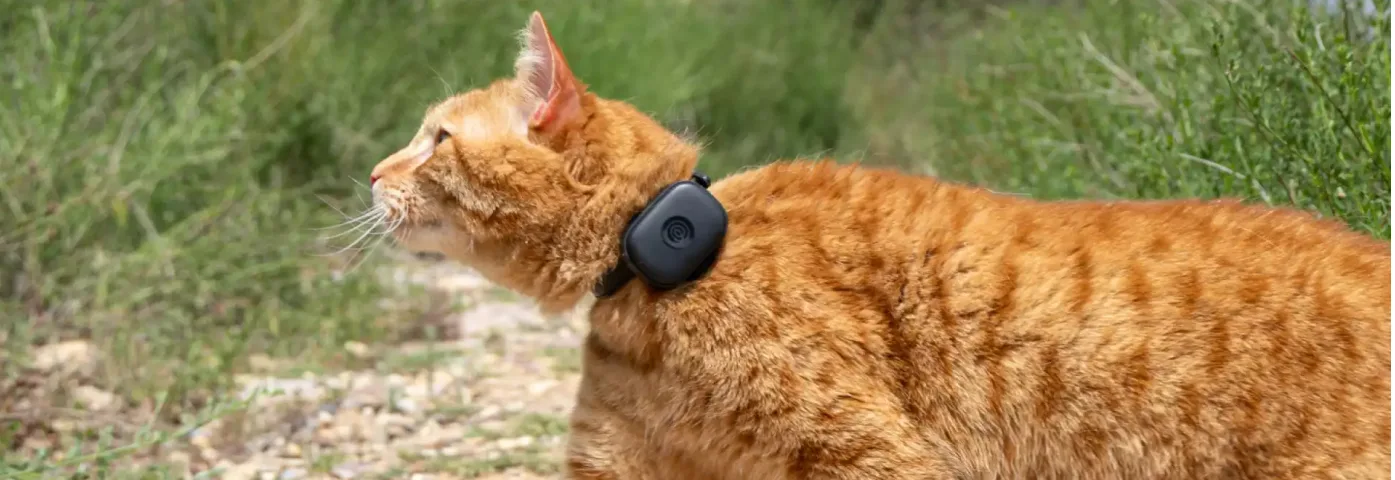
Life360 Pet GPS helps change that. Instead of guessing, you open the app and see your cat's location on the same map as the rest of your family. The tracker taps into satellites and runs on cellular networks for real-time updates, so when your kitty slips out, you know where they are instead of where they were three hours ago.
A few features built for exactly this moment:
Place Alerts let you set spots like home, the sitter's, or the park, so you get pinged the second your cat arrives or leaves.
Escaped Pet Mode instantly notifies your Circle when your cat leaves an area unexpectedly, so the whole family can fan out and look.
The Pet Finder Network sends a Lost Pet Alert to nearby Life360 members with your cat's details and your contact info, turning millions of members into extra eyes on the street.
A built-in safety light helps you spot your cat once you're close, especially during those nighttime searches.
And because your pet lives on the same map as your people and favorite things, you're not juggling four apps and four logins during the one moment you can't afford the time.
Tools handle the finding, and a little prevention handles the rest. Spaying or neutering cuts the urge to roam in search of a mate. A quick audit of how your cat got out, then sealing that gap, prevents the repeat performance. Giving an indoor cat plenty to do at home, a tall cat tree, window perches, toys, and play, scratches the curiosity itch that sends them looking for the door in the first place.
Final Thoughts
So, do cats come back home? Usually, yes. Your cat is built to find their way back. Most missing cats turn up close to home, and the families who search early and smart are the ones reunited fastest. The worry you're feeling is real, but the odds are genuinely on your side.
What you can control is how quickly you go from where did they go?
to found you.
Knowing how your cat navigates, where they're likely hiding, and having real-time location at your fingertips turns a helpless night into a plan.
Life360 Pet GPS was built because pets are family, too. It puts your kitty on a shared map with the rest of your people and things, with real-time tracking, escape alerts, and a finder network to help bring them home faster.
Explore Life360 Pet Safety and the Life360 Pet GPS tracker to keep your whole family, the four-legged members included, safe and found.
Your cat belongs on the family map.
Real-time tracking, escape alerts, and a Pet Finder Network — because "I hope they come back" shouldn't be the plan.